

Cancer Support Counseling | San Rafael
Cancer Support Counseling in San Rafael, CA, serving cancer patients and their families throughout the Bay Area, including San Francisco
Michelle Baumgartner, Cancer Support Therapist in San Rafael, CA
You just stepped out of your doctor's office. You're not sure you heard the words correctly: you have cancer. Your body may feel numb, or it may be shaking. What do I do now? What comes next? How will I get through this? The unknowns are frightening.
As you begin treatment, you may feel anxious and depressed. There are real fears you're carrying: fear of death, fear of loss, fear of what your body may not be able to do. Your world has been turned upside down, and you may not feel like yourself. You may not look like yourself either.
As a cancer patient in treatment, surgery, chemotherapy, radiation, and/or medications take a toll on the body. You may feel broken in ways that are hard to put into words. Your body remembers what it's been through, even when your mind is ready to move past it. Tension and numbness can settle into places you don't expect.
Even once the hardest parts are behind you, there is often more: another scan, another test, another decision to make. Cancer can be its own kind of chronic illness, one that doesn't always follow a predictable timeline. What if it comes back? That question can sit quietly in the background of an otherwise ordinary day.
Treatment may be finished, but figuring out how to live with what happened is its own process. You are not the same person you were before. This experience has changed how you see your life, your relationships, and what matters to you. You may notice anxiety in places it wasn't before, or doubt where there used to be confidence. The energy you used to have may feel harder to find. You may have been managing this on your own, and you may be ready for support that goes beyond what friends and family can offer.
A Compassionate Cancer Support Therapist in San Rafael

Michelle Baumgartner, Cancer Survivor Support Therapist in San Rafael CA
I am Michelle, a Licensed California therapist. I work with adults living with cancer, whether currently in treatment or years past it, and with family members and other caregivers who are walking alongside them. Therapy sessions may include supporting coping and adjustment to the changes, managing symptoms including anxiety or depression, processing trauma, and understanding the impact of what you are experiencing. The post-treatment period often benefits from support for growth and integration of your experiences. Much of this work is simply sitting with the not knowing, together. I can be with you in the fear, the anxiety, the grief, without rushing you past any of it.
What Integrative Cancer Support Counseling Might Include
For your mind, you may need support in managing the thoughts that contribute to anxiety or depressed feelings through cognitive behavioral therapy. Or through supportive inquiry in making sense of your experience.
For your emotions, I provide a caring and compassionate space where you can express your emotions, be heard and validated as you grieve your losses. Or you may be wanting to work with newfound strengths, learn how to adapt your life, or explore how to better get your needs met and set new boundaries with others.
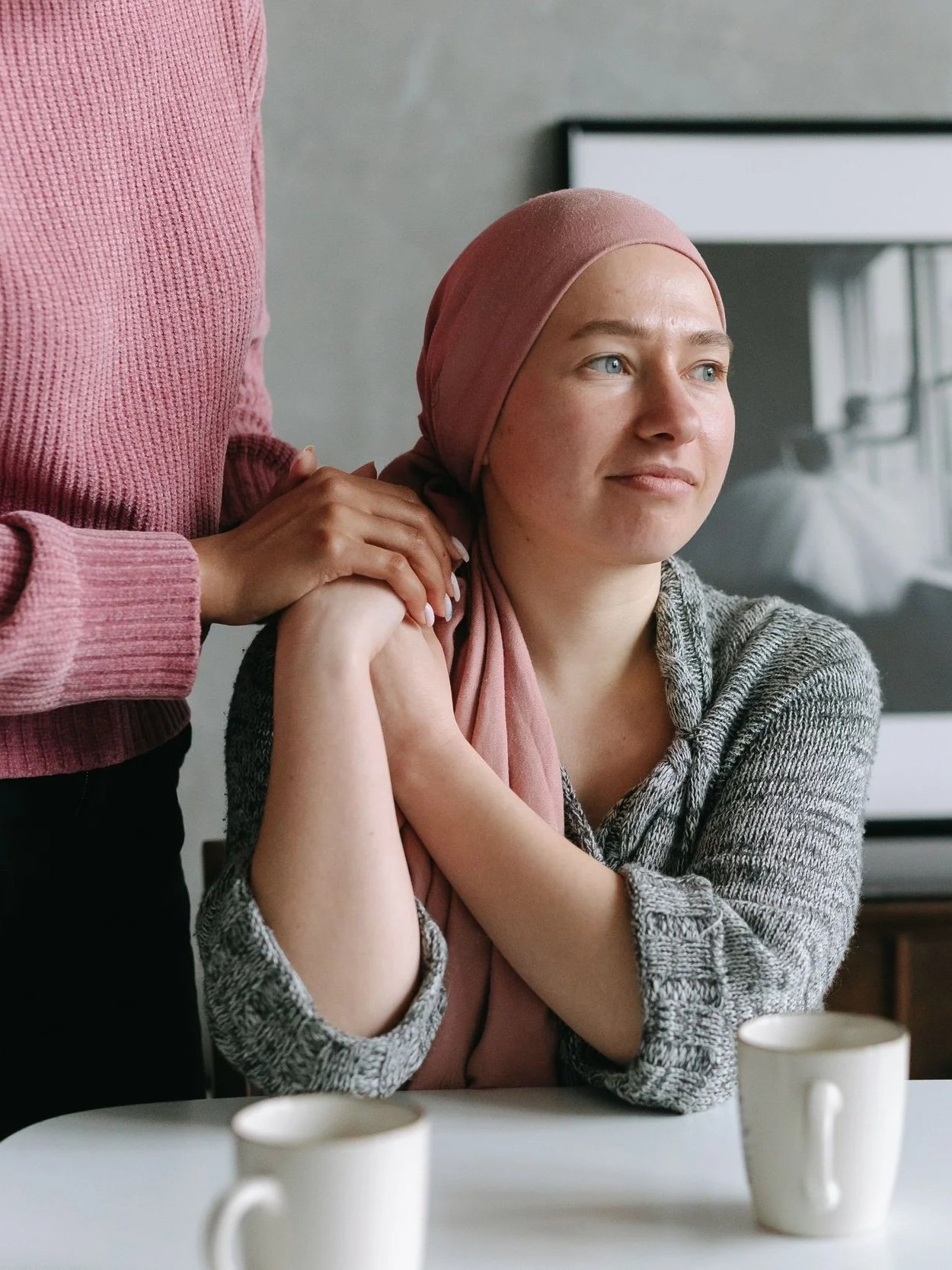
If you are preparing for surgery, chemotherapy or radiation, we will use guided imagery for relaxation, support, or to enhance the effectiveness of the treatments you are receiving, or suggestion hypnosis to support positive healing.
To discharge what is held in your body, I will support you in bringing awareness to your body sensations, regulating those sensations, or moving them out of your body so you feel relaxed, less tense, and more whole through Sensorimotor Psychotherapy. I can support you in learning to befriend and appreciate your body and accept the changes.
For the spirit, we may explore what gives you comfort, connects you to something greater than yourself, to how you see yourself and the world, or to what gives you meaning and purpose.
I can help you assess and heal changes that may have occurred in your close relationships, your career, or how you spend your time while either in cancer treatment or post treatment.
If you are facing the end of your life, I can support you to focus on what has heart and meaning, provide guided imagery or meditation, explore existential issues, and support a transition to hospice care.
Counseling Support for Cancer Caregivers
Supporting someone through cancer changes your life too. It often asks for more than anyone anticipates, physically and emotionally. Caregivers may experience burnout or secondary trauma.
When someone you love is diagnosed with cancer, you may step into the role of caregiver almost overnight. It comes from love, but it can also be one of the more demanding roles a person carries. Your own needs are often the first thing to get pushed aside, which can lead to exhaustion and a sense of being alone in it.
My practice offers caregivers a space to process their own fears and other emotions, a place for self-care, and to get support as they advocate for medical care for their loved one. Roles at home often shift when someone is diagnosed, and there can be strain in relationships.
There are also support groups for caregivers and family members through many of the local cancer medical centers or organizations.
Cancer Support Groups and Other Resources
Individual counseling isn't the only form of cancer support, and it isn't right for everyone. Support groups, workshops, and other community resources exist throughout the Bay Area, and many people use more than one kind of support at the same time.
Many hospital-based cancer centers provide free or reduced-cost counseling, social services, or patient navigation; support groups, often with a focus on a specific diagnosis; complementary treatments such as massage, acupuncture, yoga; and educational workshops that help patients, families, and caregivers navigate diagnosis and treatment. Referrals into these programs often come through an oncologist, oncology nurse, social worker, or a private therapist.
Local and nearby facilities to Marin County that provide the above services include MarinHealth Cancer Care, UCSF Helen Diller Family Comprehensive Cancer Center, Women’s Cancer Resource Center in Berkeley, and the Cancer Support Community San Francisco Bay Area. The American Cancer Society also has resources.
I can help support you to find the right additional support groups or services, as well as provide individual therapy to support your unique challenges and healing.
Cancer Support Counseling San Rafael: Empowering Cancer Survivors to Cope and Heal
What makes me unique is that I offer an integrated approach that supports mind, body, and spirit healing for those with cancer or their caregivers.
So, if you are facing a cancer diagnosis, need support during cancer treatment, or are ready to integrate and heal from your cancer experience, I can provide a space that honors your experience with compassion and presence.
Contact me for a free 20-minute phone consultation. We will develop a plan that supports your healing journey.
My other specialties include trauma therapy, somatic therapy, grief counseling, and women’s midlife and menopause counseling.
Cancer Support Counseling FAQs
-
Cancer support counseling is therapy focused on the emotional and psychological effects of a cancer diagnosis, treatment, and survivorship. It can help patients, survivors, and caregivers process medical trauma, anxiety, depression, and changes in identity.
-
Therapy can help process the anxiety, depression, and physical stress that often follow medical procedures and treatment. This may include talk therapy alongside body-based approaches that address what treatment has left in the nervous system.
-
Yes. I offer support for caregivers in Marin County in person or online.
-
Fear of recurrence is common. Counseling offers tools for managing anxiety, along with space to process what that fear brings up for you.
-
Cancer support counseling focuses on the unique aspects of a cancer journey-the experience of navigating medical systems, coping with a range of emotions and changes that occur, living with uncertainty, and growing from the experience.
-
No. Most clients I work with come to therapy at one of several points: right after diagnosis, during treatment, or in the years after treatment ends.
-
Yes. The period after treatment can be harder than people expect. Therapy can support you through lingering anxiety, fear of recurrence, adjusting to what your body has been through, identity changes, or exploring new meaning and purpose.
-
Support groups offer shared experience and connection with others. Individual counseling offers a private space focused on your specific history, emotions, body responses, and needs for support. Some people choose to do both.
-
Yes. Cancer treatment can change how people experience their bodies. Body-based approaches can support a slow return to feeling safe and present in your body.
-
Yes. Cancer often affects relationships with partners, family, and friends. Therapy can be a space to process those changes, and explore new needs and boundaries.
-
If cancer, in any form, has affected you emotionally, whether through diagnosis, treatment, survivorship, or caregiving, counseling may help. A free consultation is a low-pressure way to see if it feels like a good fit.
-
Therapy sessions are built around a therapeutic relationship where you can feel comfortable enough to explore what you're carrying and develop ways of coping that fit your unique needs, whether that's learning to manage symptoms of stress and anxiety, adjusting to identity shifts, or working through relationship challenges that have come up along the way. The focus stays on you as a whole person, not just a diagnosis.
-
Yes. Along with individual counseling, there are hospital-based and community-based programs that provide support and education throughout the Bay Area. Many are free or low-cost, and some focus on a specific diagnosis or offer virtual options. I'm happy to help you think through what might be a good fit alongside or instead of individual counseling.